Best trees to plant for small yards

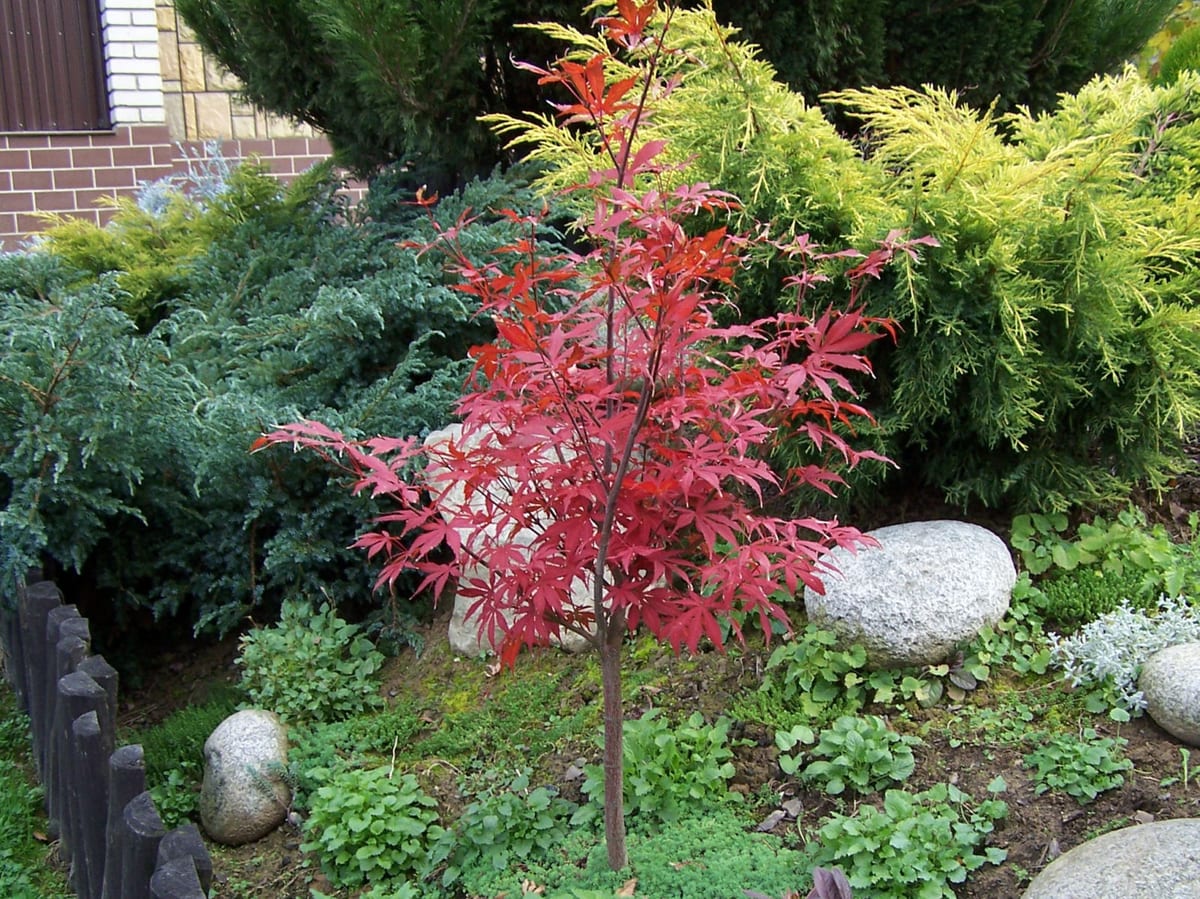
The best trees for small yards are Japanese Maples, Eastern Redbuds, Crape Myrtles, and Flowering Dogwoods. These species stay between 10 and 30 feet tall, have non-aggressive root systems, and look good at every stage of maturity. If your lot is under 5,000 square feet, this article is for you.
Modern housing developments pack 20 or more homes per acre. That means small lots, short setbacks, and maybe 15 feet between your house and the fence. You can’t plant a 60-foot Valley Oak in a yard that’s 30 feet deep. I’ve lived on a small lot in Northern California for years, and I’ve watched my neighbors make every mistake in the book. One guy planted a Silver Maple six feet from his driveway. Three years later, the roots buckled the concrete. Cost him $4,200 to fix.
You need trees that stay small, develop well-behaved root systems, and look good at maturity. For even more small-yard tree ideas, we’ve put together an additional list worth checking out. Here are the trees that actually work.
Japanese Maple: the single best tree for a small yard
I’m going to be blunt. If you have a small yard and you plant one tree, make it a Japanese Maple (Acer palmatum). I’ve owned three different cultivars over the years, and every one has been worth the money.
Japanese Maples top out at 10 to 25 feet depending on the cultivar. Most of the popular varieties stay under 15 feet. They grow slowly, about 6 to 12 inches per year, so they won’t outrun your yard. That slow growth is a feature, not a drawback. The branch structure develops gracefully without much pruning. You’re not fighting this tree. You’re just watching it do its thing.
Hardy in USDA zones 5 through 8, and they do fine in the warmer parts of zone 9 with afternoon shade. Here in Northern California, zone 9b, I give mine morning sun and protect it from the hot western exposure. No problems.
Which cultivar should you buy?
- ‘Bloodgood’ gives you deep burgundy leaves all season long. Tops out around 15 to 20 feet. This is the default recommendation for a reason.
- ‘Emperor One’ has dark red foliage that holds its color even through 100-degree heat. Slightly more sun-tolerant than ‘Bloodgood.’
- ‘Sango-kaku’ (Coral Bark Maple) has coral-red bark in winter that lights up a dormant yard. Green leaves in summer turn golden-yellow in fall. Stays around 20 to 25 feet.
- ‘Crimson Queen’ is a weeping laceleaf variety that only reaches 8 to 10 feet. Perfect next to a patio or water feature.
- ‘Viridis’ is another laceleaf weeper with green leaves that turn gold and crimson in October. Stays under 10 feet.
You can spend $80 for a 3-gallon nursery specimen or $400 and up for a mature 6-foot tree. Either way, you’re getting the best small tree money can buy. The ISA (International Society of Arboriculture) rates Japanese Maples as having a low risk for root damage to structures, which matters when you’re planting 10 feet from your house.
Planting and care
Plant them in well-drained soil with morning sun and afternoon shade. They don’t like soggy roots or baking afternoon heat. The WUCOLS guide (Water Use Classification of Landscape Species, developed by UC researchers) rates Japanese Maple as a moderate-water plant in the Central Valley. That means regular irrigation through summer, not just a sprinkle. Mulch the root zone with 2 to 3 inches of wood chips, keeping mulch 4 inches away from the trunk. Water deeply once a week in summer (twice a week during heat waves above 105 degrees). Feed once in early spring with a slow-release fertilizer. That’s it. They’ll reward you for decades. A well-cared-for Japanese Maple can live well over 100 years.
If you want to go deeper on Japanese Maples and their cousins, I wrote a full breakdown in our guide to maple tree varieties.
Eastern Redbud: the best spring show under 30 feet
Eastern Redbud (Cercis canadensis) is a native tree that maxes out at 20 to 30 feet tall with a 25-foot spread. It grows in USDA zones 4 through 9. The real show happens in early spring, usually March in California, when the branches explode with tiny pink-purple flowers before the leaves emerge. For two to three weeks, the tree looks like it’s been spray-painted magenta. Nothing else blooms that early with that kind of impact.
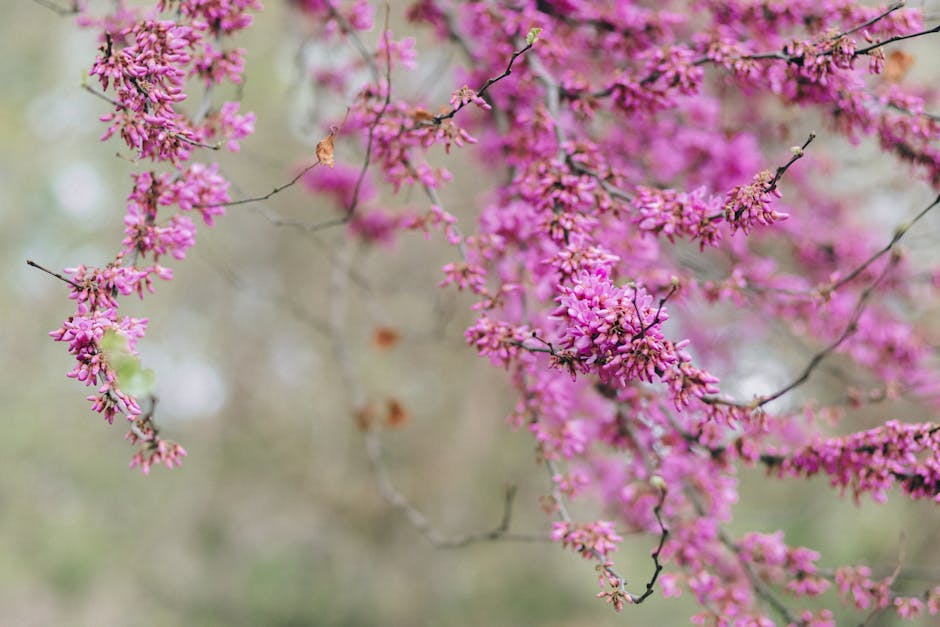
The flowers are cauliflorous, meaning they bloom directly on the branches and even the trunk. That’s what gives a Redbud in full bloom that completely-covered look. After the flowers drop, heart-shaped leaves fill in. The foliage is attractive all summer, and fall color is a decent yellow. Growth rate is moderate, about 12 to 18 inches per year once established.
Cultivars worth knowing
- ‘Forest Pansy’ has purple-red leaves through summer that turn orange-red in fall. Stays around 20 feet. This is the one I’d pick for a front yard.
- ‘Rising Sun’ has apricot-to-gold new growth that matures to green. Compact grower, about 12 to 15 feet. Good for the smallest yards.
- ‘Covey’ (Lavender Twist) is a weeping form that grows 5 to 10 feet tall. Works great as a specimen near a walkway.
Redbuds cost $40 to $100 at most nurseries for a 5-gallon container. Here’s the honest drawback: Redbuds are relatively short-lived. You’ll get 20 to 30 good years, maybe 40 in ideal conditions. That’s less than half the lifespan of a Japanese Maple. But for $60 and one of the best spring displays in the tree world, Redbud earns a spot on the list.
Plant in full sun to partial shade. They’re adaptable to most soil types as long as drainage is reasonable. Once established after the first two years, they’re surprisingly drought-tolerant. Water deeply every 10 days during dry summers. If you’re in the Sacramento Valley, consider the Western Redbud (Cercis occidentalis) instead. The UC Davis Arboretum selected it as an Arboretum All-Star for proven Sacramento Valley performance, and WUCOLS rates it as low-water once established. It’s smaller (10 to 18 feet), tighter in form, and handles our dry summers better than its eastern cousin.
Crape Myrtle: four months of continuous blooms
Crape Myrtle (Lagerstroemia indica and hybrids) is everywhere in California and across the South for good reason. Depending on the cultivar, you can get anything from a 5-foot shrub to a 30-foot tree. For a small yard, stick with the mid-range varieties that grow 12 to 18 feet.
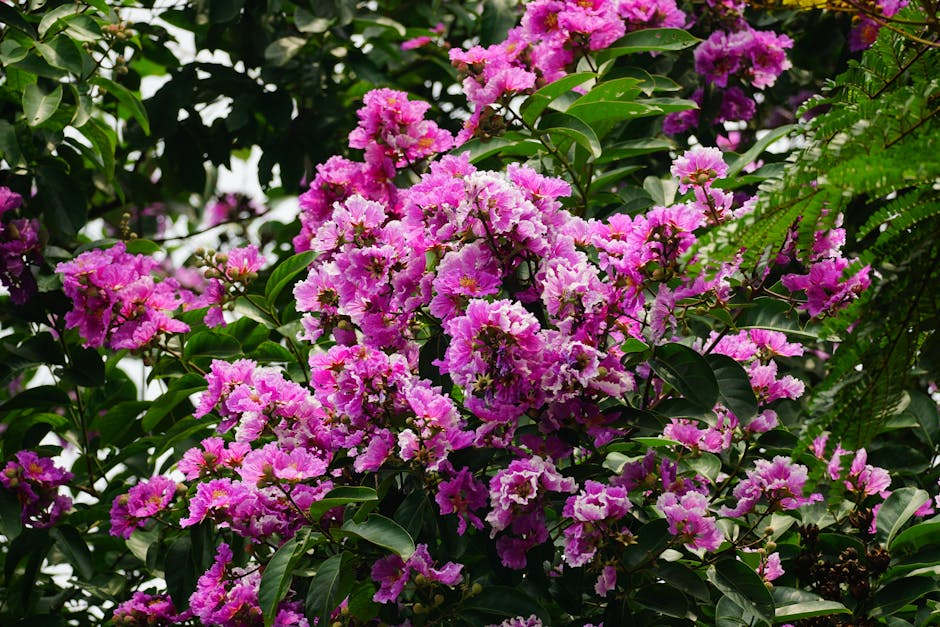
The flowers bloom from June through September, sometimes into October. That’s three to four months of continuous color. No other small tree comes close to that bloom period. Fall foliage ranges from orange to red depending on the cultivar. The exfoliating bark, which peels to reveal smooth cinnamon and cream-colored layers underneath, is attractive in winter. You get four-season interest from a single tree.
Best cultivars for small yards
- ‘Natchez’ has white flowers and cinnamon-brown bark. Grows 20 to 30 feet, so it’s on the larger side. Excellent powdery mildew resistance.
- ‘Tuscarora’ has coral-pink flowers and stays around 15 to 20 feet. One of the best for disease resistance. Bred by the U.S. National Arboretum.
- ‘Sioux’ has dark pink flowers and tops out at 15 feet. Good pick for tight spaces.
- ‘Acoma’ is a semi-dwarf white-flowering variety that stays 10 to 12 feet. Weeping habit. Perfect near patios.
- ‘Dynamite’ has true red flowers (not pink-red, actual red) and reaches 15 to 20 feet.
Crape Myrtles thrive in zones 7 through 10 and need full sun, at least 6 hours of direct light. The UC Davis Arboretum lists several Crape Myrtle cultivars as Arboretum All-Stars, meaning they’ve been tested on the UC Davis campus and proven reliable in Sacramento Valley conditions. WUCOLS rates them as low-water once established. That means after year two, they need almost nothing from your hose. A 5-gallon container runs $25 to $60 at the nursery. Larger 15-gallon specimens cost $80 to $150.
The one thing you must not do
Do not let anyone “crape murder” your tree. That’s the lazy hack-job where someone cuts all the branches back to ugly stubs every winter. It ruins the natural vase shape, produces weak whippy growth with small flower clusters, and creates knobby permanent scars. The tree never recovers its form.
Proper pruning means removing suckers at the base, cutting out crossing branches, and thinning the interior for airflow. Do this in late February before new growth starts. We have a full article on the right way to trim Crape Myrtle that will save your tree’s dignity.
Flowering Dogwood: the classic understory pick
Flowering Dogwood (Cornus florida) grows 15 to 25 feet tall with a spreading, layered branch structure that looks elegant even in winter. The white or pink bracts (they’re not technically petals, but nobody cares) appear in spring and cover the tree for two to three weeks. Red berries follow in fall and attract birds. The foliage turns red to purple. Even the bark, with its blocky alligator-hide pattern, has character.

Dogwoods are understory trees in the wild. They grow beneath taller oaks and hickories in eastern forests. This tells you what they want in your yard: partial shade, especially afternoon shade in hot climates. They like acidic, well-drained soil with a pH between 5.5 and 6.5. They don’t tolerate drought well, so plan on regular watering during dry summers, about an inch per week.
Hardy in zones 5 through 8. In zone 9, they struggle with the heat. If you’re in the Central Valley or Sacramento area, consider a Kousa Dogwood instead (more on that below).
Cultivars and alternatives
- ‘Cherokee Princess’ is the standard white-bracted form. Heavy bloomer, reliable performer. 20 to 25 feet.
- ‘Cherokee Brave’ has pink-to-red bracts with white centers. Same size.
- ‘Appalachian Spring’ was bred by the University of Tennessee specifically for dogwood anthracnose resistance. If anthracnose is in your area, this is the one to buy.
- Kousa Dogwood (Cornus kousa) is the Asian relative that’s naturally resistant to anthracnose. It blooms later, in early June, with pointed white bracts. The fruit looks like a raspberry and is edible (tastes like a bland mango). Kousa grows to about 20 feet and handles more sun and heat than Florida Dogwood. Better choice for Northern California in my experience.
Dogwood anthracnose (Discula destructiva) is a real disease and has killed thousands of native Dogwoods in the eastern U.S. since the 1970s. It causes leaf spots, twig dieback, and cankers on the trunk. Good air circulation, proper watering (at the base, not overhead), and resistant cultivars are your best defenses.
Expect to pay $50 to $150 for a 5-gallon Dogwood at a nursery. We also have a full article on the Evergreen Dogwood, a rarer species worth seeking out.
Olive trees: beautiful, but know what you’re getting into
Olive trees (Olea europaea) stay relatively small, usually 15 to 25 feet, and they grow quickly with a nice rounded canopy. The silvery-green foliage is attractive year-round, and the gnarled trunk develops real character as the tree ages. They handle California heat and drought like nothing else. Zones 8 through 10.
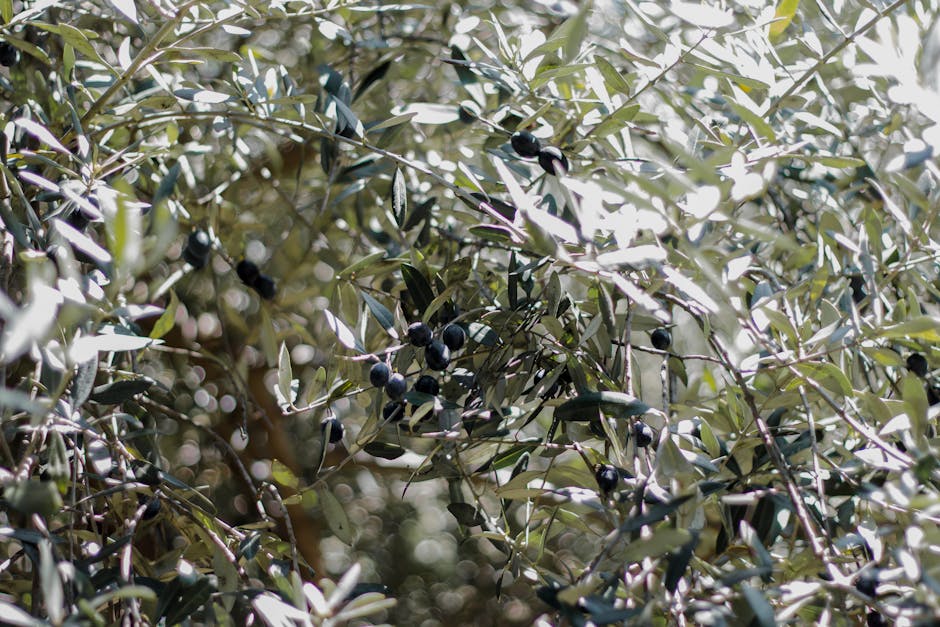
The problem is the fruit. If you plant a fruiting olive, you will have olives dropping on your patio, your walkway, your car, and anything else underneath the canopy. They stain concrete purple. They’re slippery underfoot. You will spend hours cleaning them up every fall. I’ve seen it ruin patios.
Go fruitless or prepare for the mess
- ‘Swan Hill’ is the most popular fruitless olive. Produces almost zero fruit and less pollen than other varieties, which matters if you have allergies. Grows 25 to 30 feet with a 25-foot spread.
- ‘Wilsonii’ is another fruitless option, slightly smaller at 20 to 25 feet. Denser canopy than ‘Swan Hill.’
- ‘Little Ollie’ is a dwarf non-fruiting cultivar that stays 4 to 6 feet. Works as a hedge or container plant, not really a tree.
Fruitless varieties cost a bit more, usually $60 to $200 depending on size. A 24-inch box specimen of ‘Swan Hill’ can run $300 to $500 at a specialty nursery. If you go with a fruiting variety, you can have it sprayed with a growth regulator each spring to reduce fruit set, but that costs $150 to $250 per application and you need it every year.
Olives are tough once established. WUCOLS rates them as very low water, and the UC Davis Arboretum selected ‘Swan Hill’ as an Arboretum All-Star specifically for its performance in the Sacramento Valley. After the first two years, they need almost no supplemental water. They handle poor soil and laugh at 110-degree heat. The trade-off: they can be slow to establish and look scraggly the first couple of years.
Two bonus picks worth considering
Smoke Tree (Cotinus coggygria)
Smoke Tree grows 10 to 15 feet tall with an equal spread. In summer, the wispy flower clusters look like puffs of pink or purple smoke floating above the foliage. ‘Royal Purple’ has deep burgundy leaves all season and purple smoke plumes. ‘Golden Spirit’ has chartreuse-gold leaves. Hardy in zones 4 through 8. Full sun. WUCOLS rates Smoke Tree as low-water once established, so it fits right into a drought-conscious NorCal yard. About $40 to $80 at the nursery.
Serviceberry (Amelanchier)
Serviceberry grows 15 to 25 feet depending on species. White flowers in early spring, edible blue-black berries in June (they taste like blueberries), and outstanding orange-to-red fall color. ‘Autumn Brilliance’ is the go-to cultivar. Hardy in zones 4 through 9. Handles partial shade. These trees deserve more attention than they get.
Trees to avoid in a small yard
Big shade trees belong in big yards. Do not plant these on a small lot:
- Valley Oak, Live Oak — They grow 40 to 70 feet tall with massive root systems that can extend 2 to 3 times the canopy width.
- Silver Maple, Norway Maple — Fast-growing but huge, with aggressive surface roots that crack driveways and clog sewer lines. Silver Maple roots are the worst offenders I’ve seen.
- American Elm — Beautiful but 60 to 80 feet tall. Not for a 30-foot yard.
- Sweet Gum — The spiny seed balls alone are reason enough. They also get 40 to 60 feet tall and have surface roots that buckle concrete.
- Privet — Technically a shrub-tree, but messy, invasive, and not worth the trouble. It drops berries everywhere and self-seeds aggressively.
If you need more guidance on trees that cause problems, check out our list of trees you should never plant in your yard.
How to pick the right tree for your yard
Walk your yard with a tape measure. Stand where you want the tree and look up. If there are power lines, stay under 20 feet at maturity. Your utility company will butcher anything taller, and you won’t have a say in the shape.
Measure the distance to your house, fence, and any hardscape. The ISA recommends planting small trees (under 30 feet) at least 10 feet from your foundation and 5 feet from fences. These aren’t suggestions. Roots grow where they want, and too-close planting creates expensive problems.
Match the tree to your conditions
- Hot, dry, full sun: Crape Myrtle, fruitless Olive, Smoke Tree
- Partial shade: Japanese Maple, Dogwood, Serviceberry
- Spring flowers: Redbud (earliest), Dogwood (mid-spring), Serviceberry (early spring)
- Fall color: Japanese Maple (red/orange), Redbud (yellow), Dogwood (red/purple), Serviceberry (orange/red)
- Year-round foliage: Olive (evergreen)
- Winter interest: Japanese Maple ‘Sango-kaku’ (coral bark), Crape Myrtle (exfoliating bark)
Plant it right
Then go to a real nursery, not a big-box store. Talk to the staff. Buy the healthiest specimen you can afford. Look for a straight trunk, well-spaced branches, and healthy root structure. Avoid trees that are root-bound (roots circling the pot). Those circling roots will strangle the tree in 5 to 10 years.
If you’re ready to rethink your whole yard, these practical hacks to turn your lawn into paradise are a great starting point. And follow our tree planting guide so you don’t kill it in the first summer. A $100 tree planted wrong is a $100 loss. A $100 tree planted right is a 30-year investment.
Frequently asked questions
What is the best tree for a very small yard (under 1,000 square feet)? A weeping Japanese Maple like ‘Crimson Queen’ or a dwarf Crape Myrtle like ‘Acoma.’ Both stay under 12 feet tall and have compact root systems that won’t threaten nearby structures.
How far from my house should I plant a small tree? At least 10 feet from your foundation for trees that mature under 25 feet. For trees up to 30 feet, push that to 15 feet. These distances give the root system enough room to develop without pressuring your foundation, sewer lines, or irrigation.
What small tree grows the fastest? Crape Myrtle grows 2 to 3 feet per year once established. Eastern Redbud grows about 12 to 18 inches per year. Japanese Maples are the slowest at 6 to 12 inches. If you want quick shade, go with a Crape Myrtle or a fruitless Olive.
Can I plant a small tree in a container? Japanese Maples do well in large containers (at least 20 gallons). Dwarf Crape Myrtles and ‘Little Ollie’ olive also work. You’ll need to water more often and repot every 3 to 4 years. Container trees stay smaller than their in-ground counterparts.
Which small trees have the least messy fruit or flowers? Japanese Maple produces small seeds (samaras) that aren’t a problem. Fruitless Olives produce almost nothing. Crape Myrtles drop spent flower clusters that are small and decompose quickly. Avoid fruiting Olives and Dogwoods if mess bothers you (Dogwood berries attract birds, and bird droppings follow).