Best trees to plant near the sidewalk

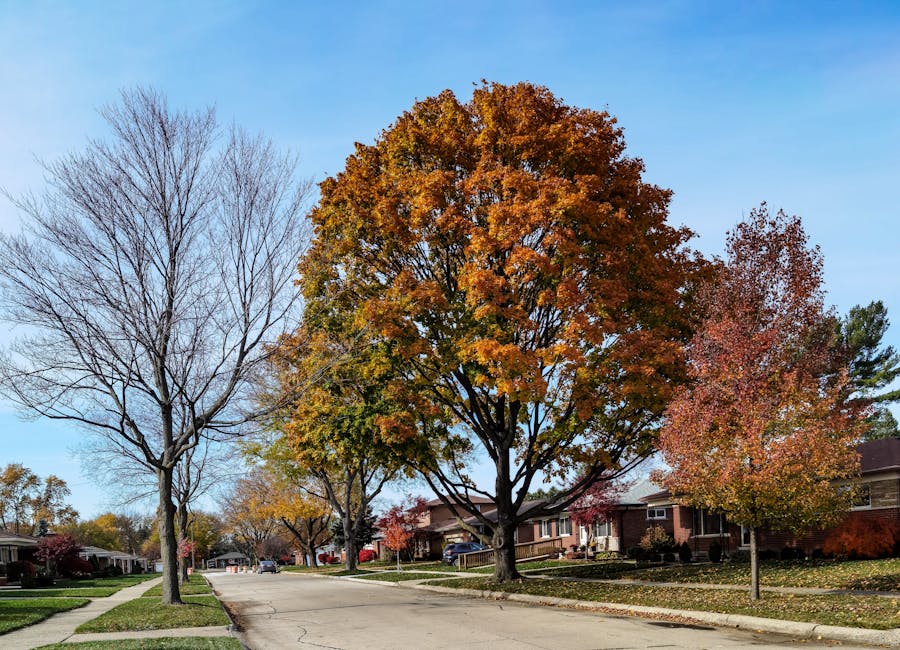
The best trees to plant near a sidewalk are species with deep, non-aggressive root systems that won’t lift concrete. Bald Cypress, Hedge Maple, Golden Rain Tree, and Ivory Silk Japanese Tree Lilac all fit that description. Plant the wrong species in your planting strip and you’re looking at $3,000 to $8,000 in sidewalk replacement, depending on the length of the damage. Plant the right species and you get shade, curb appeal, and decades of zero problems.
If you have less than 6 feet between your sidewalk and your house (or your sidewalk and the street), you need trees that behave themselves underground. The seven species below were selected for non-aggressive root systems, pest and disease resistance, drought tolerance, salt tolerance, minimal mess, and strong branch structure. All of them are available at Home Depot, local nurseries, or online suppliers.
At the end, I’ve listed six popular trees you should absolutely not plant near a sidewalk or foundation, no matter what your neighbor tells you.
Why tree roots crack sidewalks
Before we get to the species list, it helps to understand the problem. Tree roots don’t actually punch through concrete. They grow along the path of least resistance, which is usually the gap between the soil surface and the bottom of a sidewalk slab. As roots thicken over the years, they push the slab upward. A root that’s only 2 inches in diameter can lift a 4-inch concrete slab.
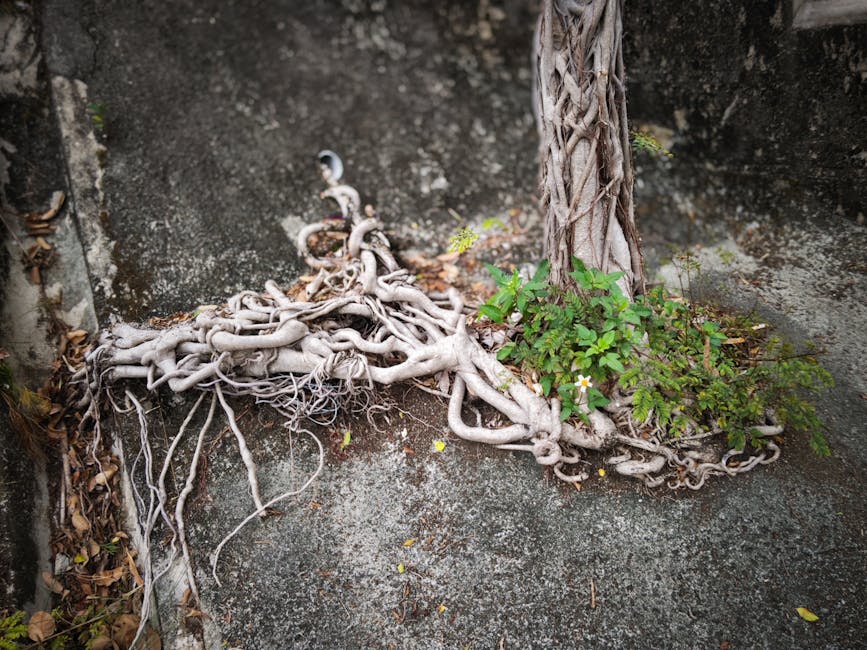
The ISA (International Society of Arboriculture) identifies three factors that predict sidewalk damage: shallow root architecture, fast growth rate, and large mature trunk diameter. Trees with taproots or deep-growing lateral roots rarely cause problems. Trees with aggressive surface roots (like Silver Maple, Sweetgum, and Willow) cause most of the damage. Keep that in mind when you’re shopping.
The planting strip width matters more than most people realize. The ISA recommends a minimum of 4 feet for small trees (under 30 feet mature height), 6 feet for medium trees, and 8 feet for large trees. Measure yours before you go to the nursery.
Bald Cypress
The Bald Cypress (Taxodium distichum) is the state tree of Louisiana, and it’s one of the most underused street trees in the country. It grows 50 to 70 feet tall in most landscape settings, though specimens in the wild can reach over 100 feet. The canopy is narrow and pyramidal, which means it doesn’t crowd sidewalks or power lines for the first couple decades.
Bald Cypress is hardy in zones 4 through 10. In zone 10, give it regular water the first two years. In zones 4 through 6, plant in spring (April or May) so it establishes roots before winter. In NorCal, I’ve seen these do well from Sacramento to Redding with zero supplemental water after year three.
The fall color is excellent: a coppery red-bronze that’s unusual for a conifer. Yes, it’s technically a conifer, but it’s deciduous. The needles drop cleanly in fall and decompose fast, unlike pine needles that sit on your walkway for months.
Here’s the key detail for sidewalk planting: Bald Cypress does not lift sidewalks. Its root system grows deep rather than spreading laterally along the surface. It also tolerates wet soil, dry soil, and urban pollution. WUCOLS rates it moderate-water in the Central Valley, but it handles both seasonal flooding and drought once established. This tree works in compacted clay too. Sacramento’s tree foundation lists it as an approved street tree, and so do most California municipalities.
Expect to pay $80 to $150 for a 5-gallon container, or $250 to $500 for a 15-gallon specimen at a local nursery. Worth every dollar for a tree that’ll outlive your grandchildren.
Columnar Golden Rain Tree
The Golden Rain Tree (Koelreuteria paniculata) shows up on many city-approved street tree lists, and the columnar variety is especially suited to tight spaces. It tops out around 30 feet with a narrow crown that stays manageable without heavy pruning. Hardy in zones 5 through 9.
In midsummer (July in most of California), it produces cascades of bright yellow flowers that are genuinely eye-catching. People stop their cars to look. The papery seed pods that follow add interest into fall. Neither the flowers nor the pods create a serious mess on sidewalks, and both decompose quickly on their own.
WUCOLS rates Golden Rain Tree as low-water once established. After the second summer, it handles drought and poor soil with no complaints and has no major pest or disease problems. If your city requires you to choose from an approved street tree list, check for this one. It’s almost certainly on there.
One note: the straight species can seed around a bit. The columnar cultivar ‘Fastigiata’ is a better pick for sidewalk strips because its narrow form stays tighter to the trunk. Budget $100 to $200 for a 15-gallon tree.
Hardy Rubber Tree
The Hardy Rubber Tree (Eucommia ulmoides) is a drought champion. Once established, it essentially takes care of itself. It grows 40 to 60 feet tall with a dense, rounded canopy that provides heavy shade. Hardy in zones 5 through 8, and it handles the heat of zone 9 with afternoon shade or regular watering the first two summers.
The leaves are glossy and dark green, and if you tear one, you’ll see rubber-like strands stretching between the halves. That’s actual latex, which is where the name comes from. The tree has zero significant pest or disease problems in North America. After the first two years of watering, it’s essentially maintenance-free. No annual pruning needed, no spraying, no fertilizer.
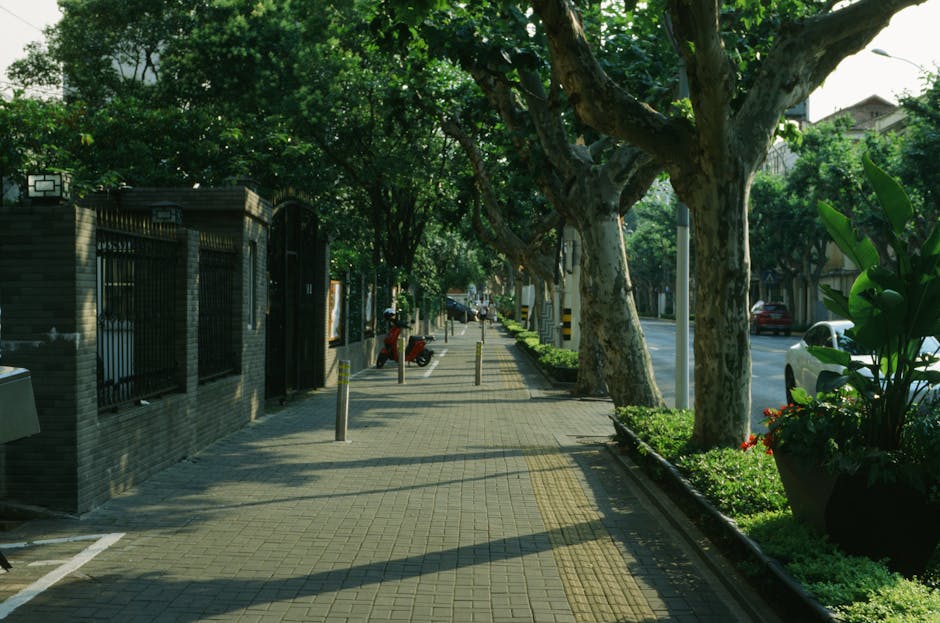
This is a workhorse tree. It won’t win any beauty contests in the fall color department (the leaves drop while still green or turn a dull yellow), but it will sit next to your sidewalk for decades without causing problems. If you just want reliable shade and zero hassle, this is your tree. Budget $150 to $300 for a 15-gallon size, though it can be harder to find than the other trees on this list. You might need to order from a specialty nursery like Forestfarm.
Hedge Maple
The Hedge Maple (Acer campestre) stays compact at 30 to 35 feet tall, which makes it practical under utility lines and in narrow planting strips. It tolerates dry, alkaline soil that would stress most maples. Hardy in zones 5 through 8. The fall color is a reliable yellow, not spectacular but consistent.
Hedge Maple has been used as a street tree in Europe for centuries, and it’s proven itself in American urban settings too. The UC Davis Arboretum selected it as an Arboretum All-Star for Sacramento Valley performance. WUCOLS rates it low to moderate water, which is impressive for a maple. Most maples are water hogs. Hedge Maple handles compacted soil, reflected heat from pavement, road salt, and air pollution. The branching structure is naturally dense and doesn’t require much pruning to maintain good form. Plan on a professional structural prune at planting and maybe one more at year five. That’s it. Budget $100 to $150 for that first prune.
Growth rate is moderate: about 12 to 18 inches per year. You won’t get instant shade, but you also won’t get the weak wood that comes with fast growers. Slow growth means dense wood, and dense wood means branches that stay attached in storms.
If you want a maple near your sidewalk but don’t want the root problems that come with Silver or Norway Maples, Hedge Maple is your tree. Silver Maples are the single worst maple you can plant near concrete. I’ve seen them lift 20-foot sections of sidewalk. For more on the maple family and how different species compare, see our guide to maple tree varieties.
Ivory Silk Japanese Tree Lilac
The Ivory Silk Japanese Tree Lilac (Syringa reticulata ‘Ivory Silk’) tops out at 20 to 30 feet. Hardy in zones 3 through 7, though it performs fine in zone 8 with consistent moisture. In early summer (June in most areas), it covers itself in large clusters of creamy white flowers with a subtle fragrance. It’s one of the showiest small trees you can plant.
Because it stays compact, this tree works under power lines without requiring utility pruning. That’s a real advantage. Utility pruning (those brutal hackjob cuts the power company makes) ruins the form of a tree permanently. They cut a notch right through the canopy and the tree never recovers its shape. With Ivory Silk, you avoid that problem entirely.
It’s cold-hardy, pest-resistant, and adaptable to most soil types including the heavy clay we deal with in parts of the Sacramento Valley. The bark is attractive year-round, a reddish-brown with a slight sheen that’s reminiscent of cherry bark.
If you’re looking for sidewalk trees that also work in small yards, the Ivory Silk is one of the best dual-purpose picks. Budget $80 to $180 for a 5 to 10-gallon container.
Purpureus Smoke Tree
The Purpureus Smoke Tree (Cotinus coggygria ‘Royal Purple’) is more of a large shrub than a tree, reaching 12 to 15 feet tall. Hardy in zones 5 through 8. But it earns a spot on this list because it’s perfect for really tight spaces where a full-sized tree just won’t fit.
The foliage is deep purple all season, one of the richest purples you’ll find on any deciduous plant. In summer, it produces those distinctive wispy, pinkish flower clusters that look like puffs of smoke, hence the name. The visual impact is outsized for such a small plant. Three of these in a row along a planting strip look like a million bucks.
It’s tough, drought-tolerant once established, and thrives in poor soil. WUCOLS rates it low-water, so your water bill won’t notice it’s there. It actually produces better color in lean soil, so don’t fertilize it. It doesn’t need much pruning beyond occasional shaping in late winter (February or March). If you’ve got a 3-foot planting strip and need something that reads as a tree from the street, Smoke Tree delivers.
Budget $30 to $60 for a 3-gallon container. That’s practically free for the amount of color you get.
Ruby Red Horsechestnut
The Ruby Red Horsechestnut (Aesculus x carnea ‘Briotii’) grows 35 to 50 feet tall with a broad, rounded crown. Hardy in zones 5 through 8. In late spring (May in California), it produces dramatic upright clusters of deep scarlet flowers. It’s one of those trees that stops foot traffic when it’s in bloom.
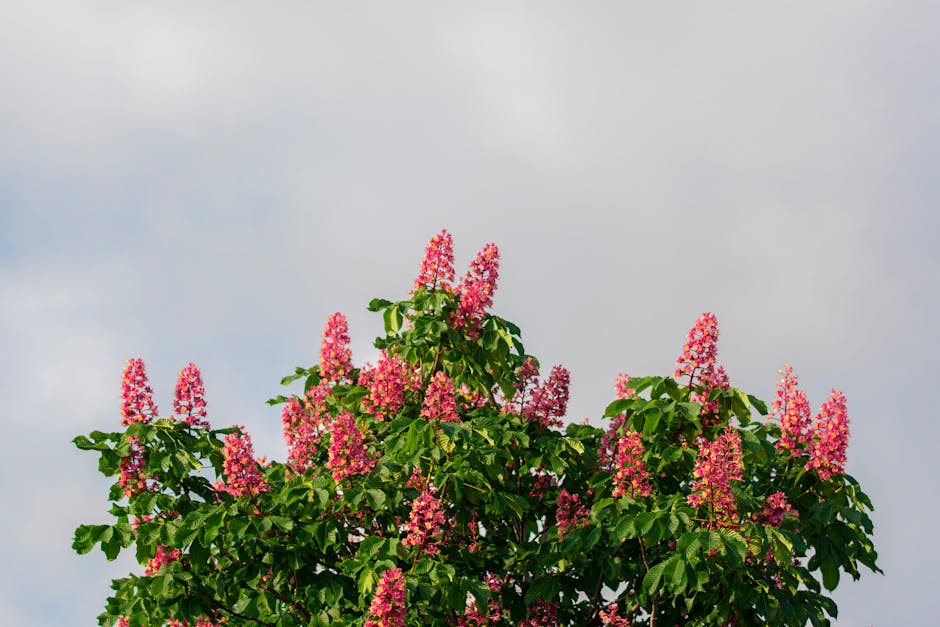
Unlike the common Horsechestnut, which drops those spiny seed cases that are a pain to clean up (and a liability on a sidewalk), Ruby Red produces far fewer fruit and creates much less mess. It has good resistance to leaf blotch disease, which plagues regular Horsechestnuts so badly that many look terrible by August. Branch structure is strong and wind-resistant.
This is a statement tree. If you have at least a 6-foot planting strip and want something that makes the neighbors ask what it is, Ruby Red Horsechestnut is hard to beat. It needs moderate water, about an inch per week during summer in inland California. Budget $200 to $400 for a 15-gallon specimen. Not cheap, but the spring bloom alone is worth it.
Trees you should NOT plant near sidewalks
These six trees are popular, widely available, and terrible choices near hardscaping or foundations. I’ve watched every one of these cause expensive damage in my neighborhood.
Holly. The berries create a continuous mess on sidewalks and stain concrete. Birds eat the berries and deposit purple droppings on everything within range. Holly roots are also more aggressive than people expect in tight spaces.
Crepe Myrtle. Beautiful flowers, but the spent blooms, seed pods, and bark shed create a year-round cleanup job on adjacent sidewalks. The surface roots can also lift pavement in tight planting strips under 4 feet wide. If you love crepe myrtles, plant them in your yard instead. Read our guide on trimming crepe myrtle if you already have one.
Olive. The fruit drops, stains everything it touches, and the mess lasts from September through January. Some cities in California (including Tucson and several municipalities in the Central Valley) have banned new olive tree plantings for this reason. Fruitless varieties exist but aren’t always reliably fruitless. A “fruitless” olive that starts producing fruit in year eight is a $3,000 problem.
Privet. Aggressive root systems that will find and exploit any crack in concrete. Spreads invasively by seed. The berries stain hardscaping. Privet is banned or restricted in several states for its invasiveness.
Bottlebrush. Constant flower and leaf litter. The dropped flowers stick to shoes and get tracked inside. Surface roots push up pavement in warmer climates (zones 9 and 10). I like the way they look, but not within 10 feet of a sidewalk.
Birch. Shallow, aggressive root systems that lift sidewalks. River Birch and Paper Birch are the worst offenders. The trees also drop small branches, catkins, and leaves continuously. Birch trees are beautiful in the right setting. Next to a sidewalk is not the right setting. If you want that white-bark look, plant one at least 15 feet from any hardscaping.
For a deeper look at problem trees, see our article on trees you should never plant in your yard.
How to protect your sidewalk when planting
Even with a well-behaved tree, you can reduce sidewalk damage risk further with a few installation techniques:
Root barriers. A linear root barrier (a 24-inch deep polyethylene or fiberglass panel) installed vertically between the tree and the sidewalk redirects roots downward instead of laterally. They cost $3 to $6 per linear foot for materials. Install them at planting, not after. Retrofitting a root barrier around an established tree risks cutting major roots.
Structural soil. Some cities now require structural soil (also called CU-Soil or silva cells) under new sidewalks near trees. This is a mix of crushed stone and soil that supports pavement weight while still allowing roots to grow through it. It’s expensive ($150 to $250 per cubic yard installed) but it eliminates root-versus-sidewalk conflicts almost entirely.
Proper planting depth. Plant the tree with the root flare visible at grade level, not buried. A tree planted too deep will send surface roots searching for oxygen, and those roots head straight for the gap under your sidewalk. This is the single most common planting mistake.
Choosing the right tree for your space
Measure your planting strip before you go shopping. Width matters more than you think. A tree that technically fits in a 4-foot strip at planting may not fit in 10 years when the trunk has grown and the root flare has expanded.
Here’s a quick guide based on planting strip width:
- Under 3 feet wide: Smoke Tree (only realistic option from this list)
- 3 to 4 feet wide: Ivory Silk Lilac, Smoke Tree
- 4 to 6 feet wide: Hedge Maple, Golden Rain Tree, Ivory Silk Lilac
- 6 feet or wider: Bald Cypress, Hardy Rubber Tree, Ruby Red Horsechestnut, plus all of the above
Also consider what’s overhead. Utility lines limit you to trees that mature under 25 feet, which narrows your choices to the Ivory Silk Lilac and Smoke Tree from this list. For more on trees that provide great fall color in any setting, check our guide to the best trees for autumn color. And if you’re planting bare root stock this winter, follow the steps in our bare root tree planting guide to give your new tree the best chance.
Pick the right tree for the right spot, and you’ll have decades of enjoyment without a sidewalk repair bill. Plant in fall or early spring for the best results. Water weekly the first two summers. After that, most of these trees take care of themselves. For more sidewalk-friendly landscaping ideas and tips on how to restore your home’s curb appeal after damage, those guides cover what to do when you’re starting fresh.