A front yard treasure: the Evergreen Dogwood tree

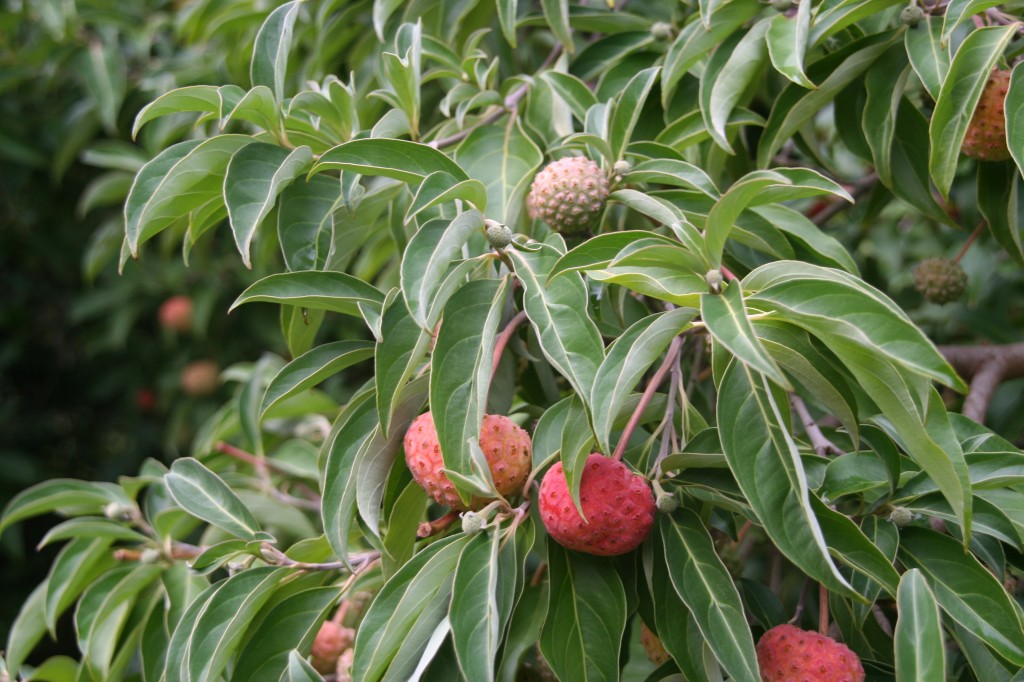
The Evergreen Dogwood (Cornus capitata) is one of the rarest ornamental trees you can plant in a Northern California yard. It holds its leaves year-round, blooms creamy white in early summer, and produces fruit that looks like strawberries hanging from the branches. Most people will walk right past one and never know what they’re looking at.
I didn’t.
I had no idea there was anything special growing in my friend Jess’s front yard. I’d been looking at that tree for years and never thought twice about it. Just a nice-looking green tree across the street. Nothing that made me stop.
Then Brad showed up with a camera.
Brad is my lawn care guy. He’s been servicing properties in our neighborhood for years, and he’s one of those people who actually knows trees. Not just “that’s a maple” level knowledge. Real knowledge. The kind where he can spot something unusual from the cab of his truck going 30 miles per hour.
Brad had been watching this tree for five years
Turns out Brad had been pruning and caring for the tree in Jess’s yard for the past five years. He knew exactly what it was: an Evergreen Dogwood. He’d been shaping it carefully, making sure it survived and grew properly, treating it like the rare specimen it is.
When I asked him why he was taking pictures of a tree he’d been trimming for half a decade, he gave me a look like I’d asked why someone would photograph a classic car. “Because it’s a rare tree,” he said. “You don’t see these.” If you want to learn more about dogwood varieties, the family is larger and more varied than most people realize.
What is a Cornus capitata?
The Evergreen Dogwood is native to the Himalayan region, from Nepal through southern China. It grows 20 to 40 feet tall and about 20 to 30 feet wide at maturity. In mild climates like Sacramento’s, it stays evergreen. In cooler zones it can go semi-deciduous, dropping some leaves in winter but never going completely bare.
It grows in USDA zones 8 and 9. Zone 7 is borderline. If you’re in the Sacramento Valley, the Central Coast, or the Bay Area, you’re in the sweet spot. Coastal Southern California works too. If you get hard freezes below 15 degrees F, this tree will struggle.
The growth rate is moderate. Expect about 12 to 18 inches of new growth per year once established. That’s slower than a Crape Myrtle but faster than most Japanese Maples. Give it five to seven years and you’ll have a real presence in the yard.
What makes the flowers and fruit so unusual
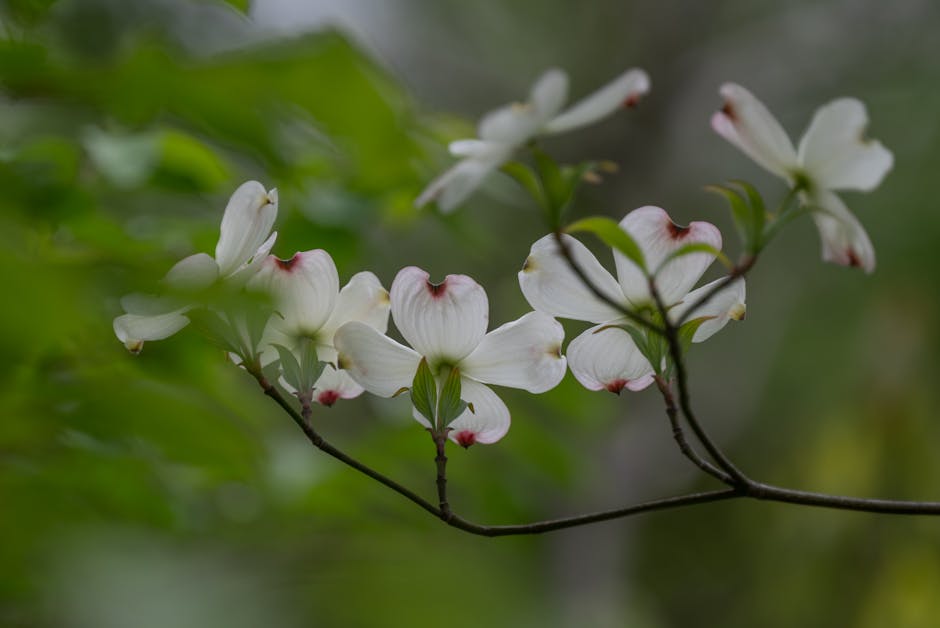
In late May through July, white to creamy-yellow bracts appear across the entire canopy. People call them flowers, but technically the showy white parts are modified leaves (bracts) surrounding the actual tiny flower cluster in the center. Same setup as the native Flowering Dogwood, just on an evergreen tree.
The real show comes in fall. Those flowers develop into round, compound fruit about one to two inches across. They turn from green to pinkish-red and look exactly like strawberries hanging from the tree. Birds go after them hard. Robins, Cedar Waxwings, and mockingbirds all show up when the fruit ripens in September and October.
The fruit is technically edible for humans too. The flesh is sweet and custard-like. Most people describe the taste as somewhere between a mango and a banana. I’ve tried one. It’s not bad, but you’ll probably leave most of them for the birds.
A tree with a short American history
Brad was right about the rarity. The Evergreen Dogwood has been grown in European botanical gardens since the 1820s, when it was first collected from Nepal. But it didn’t gain any real foothold in American nurseries until much later. In the 1980s, Dr. Ted Dudley at the U.S. National Arboretum helped introduce it more broadly to American horticulture. That makes it a relative newcomer compared to the oaks, maples, and elms that have been standard yard trees for over a century.
Even today, most nurseries don’t carry it. You won’t find one at Home Depot or Lowe’s. You might find one at a specialty nursery if you’re lucky. More likely, you’ll need to special-order it or hunt online.
Brad bought every single one
After years of caring for Jess’s tree, Brad went looking for more. He found exactly one nursery in the greater Sacramento area that carried them. So he did what any obsessed tree person would do. He bought their entire inventory.
The trees cost about $40 each in 5-gallon containers, which Brad called the bargain of the year. For a rare ornamental that most people will never encounter in their lifetime, $40 was practically nothing. Today you can expect to pay $50 to $80 for a 5-gallon specimen if you can find one. Larger 15-gallon trees run $120 to $200. He planted five of them across two customer properties. Those customers may not have realized what they were getting, but Brad did.
How to plant and care for an Evergreen Dogwood
If you track one down, here’s what you need to know.
Location: Give it partial shade to full sun. In Sacramento’s 100-degree summers, afternoon shade helps. East-facing or north-facing spots work well. The tree does best with morning sun and some protection from the hottest part of the day. The UC Davis Arboretum grows Cornus capitata specimens on campus, and their experience confirms that Sacramento Valley heat is manageable as long as you provide some afternoon protection. Full blast western exposure in July and August will scorch the leaf edges.
Soil: It wants well-drained, slightly acidic soil with a pH between 5.5 and 6.5. Sacramento’s clay is not ideal, so amend the planting hole with compost and consider a raised planting if your soil is heavy. Mixing in 3 to 4 inches of organic matter into the backfill helps break up clay and improves drainage around the root zone. Don’t plant it in standing water. Root rot will kill this tree faster than anything else.
Water: Deep watering once or twice a week through the first two summers. After that, the tree is moderately drought-tolerant, but it looks better with regular water. The University of California’s WUCOLS guide rates Cornus capitata as “Moderate” water use for inland California valleys, which means it needs some supplemental irrigation through the dry season even when fully established. In Sacramento, plan on watering every 10 to 14 days from June through September for a mature tree. Skip a month and you will see leaf drop. This is not a set-it-and-forget-it native oak. Our spring tree care checklist covers the seasonal watering schedule that works well for ornamentals like this one.
Pruning: Minimal. Shape it in late winter (February or early March) before new growth starts. Remove crossing branches and dead wood. The natural form is a rounded, multi-stemmed canopy and it looks best when you let it grow into its own shape. If you need guidance on timing, our guide to when to trim your tree breaks it down by species.
Fertilizer: Feed in early spring (February) with an acid-loving plant fertilizer. Rhododendron or azalea fertilizer works fine. One application per year is plenty.
Pests and disease: This is one of the tree’s biggest selling points. Unlike the native Flowering Dogwood (Cornus florida), which gets hammered by dogwood anthracnose, the Evergreen Dogwood has strong natural resistance to both anthracnose and powdery mildew. That disease resistance alone makes it worth planting over its American cousin in areas where anthracnose is a problem.
Why you probably haven’t seen one
The Evergreen Dogwood is still rare in American yards. Most nurseries don’t stock them because most customers don’t ask for them. People don’t know about the tree, so they don’t request it, so nurseries don’t carry it, so people never see it.
That’s a shame, because it checks every box for a front yard specimen tree. Evergreen foliage for year-round screening. Showy flowers in summer. Interesting fruit in fall that attracts birds. Moderate size that won’t outgrow a suburban lot. Good disease resistance. No invasive root problems.
If you’re shopping for a front yard specimen tree and you want something your neighbors genuinely haven’t seen before, working with expert landscape design services can help you place it for maximum curb appeal. Ask your local nursery if they can source a Cornus capitata. You might have to wait for a special order. It’ll be worth it.
Evergreen Dogwood vs. Flowering Dogwood: which one to plant?
Most people think “dogwood” and picture the native Flowering Dogwood with its pink or white spring blooms. Here’s how they compare:
- Leaves: Evergreen Dogwood keeps its leaves. Flowering Dogwood drops them every fall.
- Bloom time: Evergreen Dogwood blooms in early summer (June-July). Flowering Dogwood blooms in spring (April-May).
- Hardiness: Flowering Dogwood handles zones 5-9. Evergreen Dogwood needs zones 8-9.
- Disease: Flowering Dogwood is susceptible to dogwood anthracnose. Evergreen Dogwood resists it.
- Fruit: Both produce showy fruit. The Evergreen Dogwood’s strawberry-like fruit is larger and more eye-catching.
- Size: Both reach 20-30 feet, but Evergreen Dogwood can push to 40 feet in ideal conditions.
If you live in zone 8 or 9, the Evergreen Dogwood is the better pick for a low-maintenance front yard. Some botanists now classify it as Cornus hongkongensis subsp. elegans or group it under the broader Kousa complex, but nurseries still sell it as Cornus capitata. If you’re in a colder climate, stick with the Flowering Dogwood or consider a Kousa Dogwood (Cornus kousa), which has similar strawberry-like fruit and better cold hardiness down to zone 5. Our guide to the best trees for small yards includes several dogwood varieties that work in tight spaces.
The bottom line
For $50 to $80, you can plant a tree that 99% of your neighbors have never seen. It stays green all year, blooms white in summer, grows strawberry-shaped fruit in fall, and resists the diseases that kill other dogwoods. Brad knew exactly what he was looking at across the street. Now you do too.
For more ideas on standout yard trees, take a look at our guide to the best trees for your yard. And if you’re planting during the dormant season, our bare root tree planting guide covers how to get a young tree established the right way.