The prehistoric cycad tree that outlived the dinosaurs

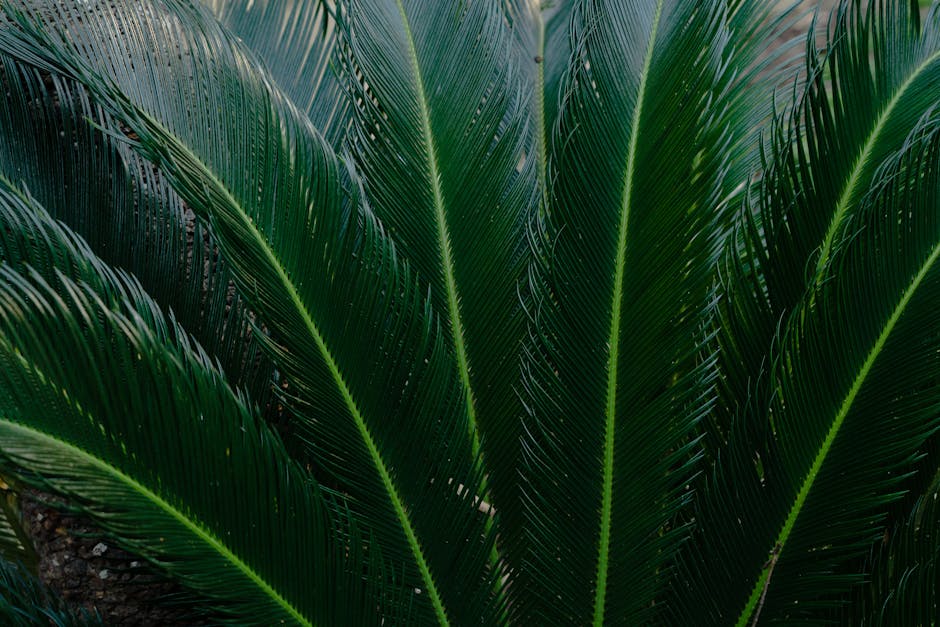
Encephalartos woodii is the loneliest tree on the planet. It is the last of its kind, a male cycad with no female counterpart, sitting in botanical gardens around the world with zero chance of natural reproduction. It survived dinosaurs, five ice ages, and 200 million years of evolution, only to end up as a species of one. If you want the full account, the story of Encephalartos woodii is one of the most remarkable in all of botany.
Cycads as a group are among the oldest seed plants still alive. They first appeared in the Permian period, roughly 280 million years ago. For perspective, flowering plants did not show up until about 130 million years ago. Cycads had a 150-million-year head start on roses.
How a single tree was found in the African forest
In 1895, botanist John Medley Wood was exploring the Ngoya Forest in Zululand, South Africa, when he spotted something unusual. A thick, multi-trunked tree with palm-like fronds at the top, standing alone on a steep hillside. He collected samples, sent them to the Royal Botanic Gardens at Kew in London, and the species was named Encephalartos woodii in his honor.
That lone tree was the only wild specimen anyone ever found. Botanists searched the surrounding Ngoya Forest for decades. No second tree turned up. Between 1903 and 1916, several stems and offsets were removed from the original plant and sent to botanical gardens. The last wild stems were collected in 1916 by James Wylie for the Durban Botanic Gardens. After that, the hillside was empty.
The original trunk at Kew sat in the Temperate House (not the Palm House, despite what many sources claim) for over 90 years. Today, Kew’s specimen has its own spot in their tropical nursery, where it produces a massive male cone about once every two to three years.
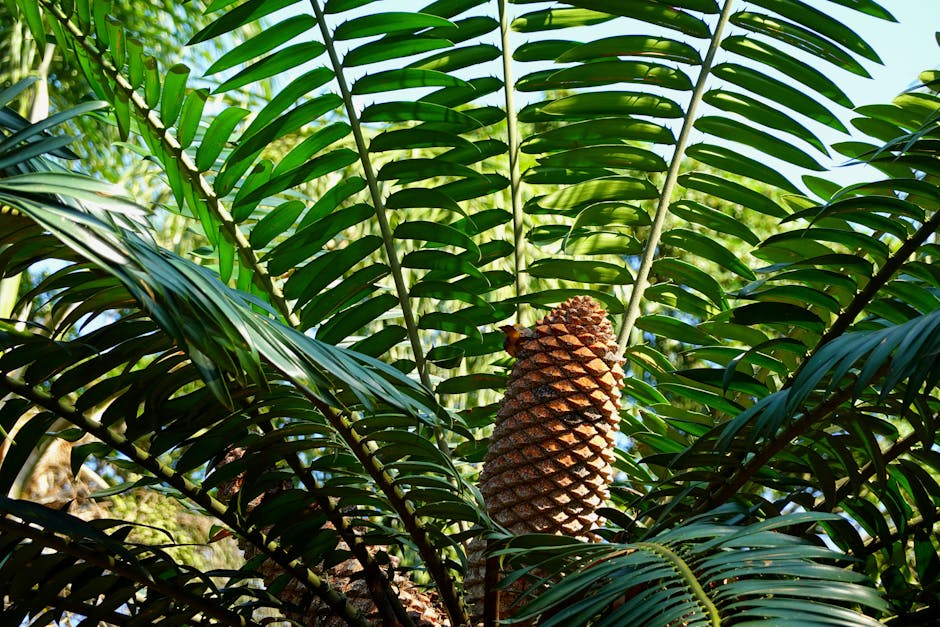
Why cycads are not palms (and why that matters)
People confuse cycads with palms constantly. They look similar from a distance, sure. Both have thick trunks topped with arching fronds. But they are not closely related at all.
Cycads are gymnosperms. They produce seeds in cones, like pine trees. Palms are angiosperms, flowering plants that produce seeds inside fruit. The split between these two groups happened over 300 million years ago. Calling a cycad a palm is like calling a crocodile a lizard. Similar shape, completely different animal.
This distinction matters if you are buying one for your yard. Cycads grow much slower than palms. A Sago Palm (Cycas revoluta), which is actually a cycad and not a palm at all despite the name, adds only 1 to 2 inches of trunk height per year. You will wait 50 years for it to reach 6 feet. Palms can grow 1 to 2 feet per year. Totally different timelines.
A tree older than almost everything alive
Cycads dominated the landscape during the Mesozoic Era, from roughly 252 to 66 million years ago. During the Jurassic and Triassic periods, they made up around 20% of all plant life on Earth. Dinosaurs ate them. Or more precisely, herbivorous dinosaurs likely fed on cycad leaves and seeds, based on fossilized gut contents found in some specimens.
They survived the Cretaceous-Paleogene extinction event 66 million years ago, the same asteroid impact that killed the non-avian dinosaurs. They survived five separate ice ages during the Pleistocene. A single cycad stem can live between 500 and 1,000 years, and some species may live longer. The oldest known living cycad is a specimen of Encephalartos altensteinii at Kew Gardens, brought from South Africa in 1775. It is still alive and still growing.
But surviving as a species requires reproduction. And that is where Encephalartos woodii hit a wall.
The reproduction problem nobody can solve
Cycads are dioecious, meaning individual plants are either male or female. They produce large cones (some over 2 feet long) that are either pollen-producing (male) or seed-bearing (female). Pollination in the wild relies on specific beetle species that move between male and female cones.
The last known Encephalartos woodii is male. No female has ever been found, despite over a century of searching. The tree cannot self-fertilize. Without a female, natural seed production is impossible.

Botanists worldwide have propagated between 500 and 1,000 plants through cloning, division of offsets, and tissue culture. Every one of them is genetically identical to the original male. They are all clones. Hybridization with closely related species like Encephalartos natalensis is possible, and some botanists have produced viable hybrid seeds. But the offspring are hybrids, not pure Encephalartos woodii.
Researchers at the Royal Botanic Gardens, Kew and several South African institutions continue to search the Ngoya Forest and surrounding areas for a female plant. Some scientists have explored hormone treatments to try inducing sex change in the male plants, a phenomenon that occurs rarely in other cycad species. So far, no success.
So while you can see this tree in botanical gardens on every continent except Antarctica, every single specimen is the same individual copied hundreds of times over. The species exists, but it cannot evolve. It cannot adapt to new conditions. It is frozen in genetic time.
What cycads cost on the black market
Encephalartos woodii is worth more than most cars. Individual specimens have sold for over $20,000, and some mature plants have reportedly changed hands for six figures. Cycad poaching is a serious problem in South Africa, where organized criminal networks dig up rare wild cycads and sell them to private collectors. South Africa’s Endangered Species Protection Act makes it illegal to possess, sell, or transport protected cycad species without a permit.
In 2014, South African authorities estimated that cycad theft from the wild was a multi-million-dollar annual problem. Some species of Encephalartos sell for $5,000 to $50,000 depending on size and rarity. The rarer the species, the higher the price. Collectors in Asia, the Middle East, and the United States drive most of the demand.
This is not just a conservation issue. It is a crime problem. If someone offers you a “rare Encephalartos” without documentation, walk away.
Cycads you can actually grow at home
You will not find an Encephalartos woodii at your local nursery. But several cycad species are available and make striking landscape plants in warm climates. They are slow-growing, pest-resistant, and about as low-maintenance as a tree gets once established.
Sago Palm (Cycas revoluta) is the most common landscape cycad in the United States. It grows in USDA zones 8b through 11. In Northern California, you will see them in Sacramento, the Bay Area, and anywhere along the coast that does not freeze hard. The UC Davis Arboretum has Sago Palms growing on campus in full sun, and they handle Sacramento’s summer heat without issue. WUCOLS rates Cycas revoluta as “Low” water use for inland California, so once established they need very little supplemental irrigation through the dry months. A 1-gallon nursery plant costs $15 to $30. A mature 4-foot specimen runs $200 to $500. They handle drought well once established and look good in containers on a patio. Full sun produces the densest, most compact growth. In too much shade, the fronds stretch out long and floppy.
Sago Palms handle cold down to about 15 degrees Fahrenheit for short periods. Sacramento occasionally dips into the low 20s in December and January, which is fine. A prolonged freeze below 20 degrees can burn the fronds, but the trunk usually survives and pushes out new growth in spring. If a hard freeze is forecast, throwing a frost cloth over the plant for the night is cheap insurance.
One warning about Sago Palms: every part of the plant is toxic to dogs. The seeds are the most dangerous. A dog that eats one or two seeds can suffer liver failure and die within days. If you have dogs that chew on plants, skip the Sago entirely.
Cardboard Palm (Zamia furfuracea) stays small, topping out at 3 to 4 feet, and tolerates zones 9 through 11. It handles shade better than most cycads, which makes it useful under larger trees. In the Sacramento Valley, Cardboard Palm is borderline. It is less cold-hardy than Sago Palm and can suffer damage below 25 degrees. If you want to grow one in Sacramento, plant it against a south-facing wall where reflected heat gives it extra warmth in winter. Expect to pay $25 to $60 for a nice specimen.
Coontie (Zamia integrifolia) is native to Florida and grows in zones 8b through 11. It stays under 3 feet and works as a groundcover or border plant. This is the only cycad native to the continental United States, and it is the host plant for the Atala butterfly, which was once thought extinct.
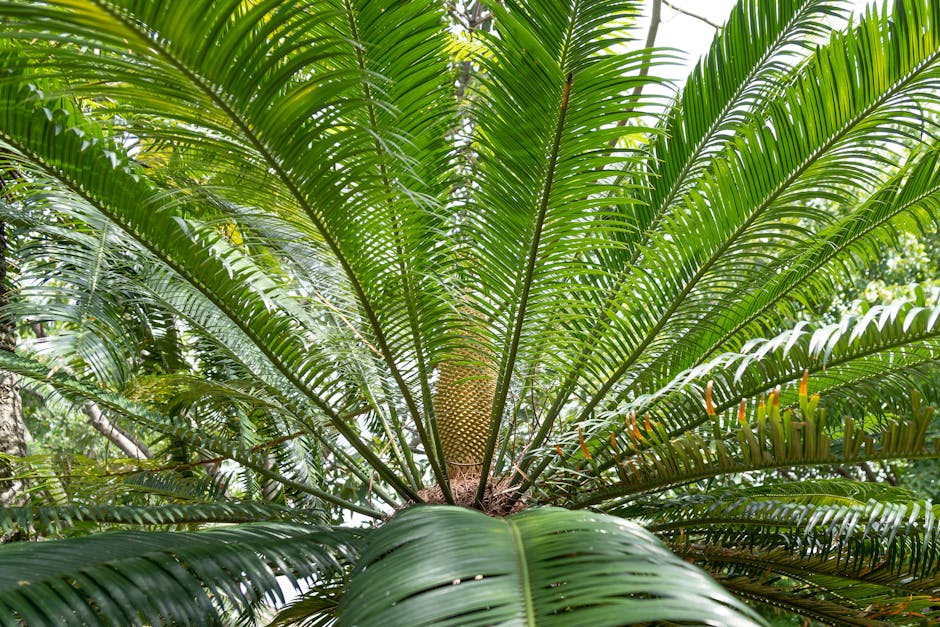
All cycads want well-drained soil. Sandy or rocky soil works. Clay does not. They rot in standing water faster than you can blink. If you are in the Sacramento Valley, where clay soil is the default, plant your cycad in a raised bed or amend heavily with pumice and coarse sand to improve drainage. A 50/50 mix of native soil and pumice works well in Sacramento’s heavy clay.
Water deeply but infrequently, maybe once a week in summer and almost never in winter if you get any rain at all. Full sun is best for all landscape cycads, though Cardboard Palm tolerates more shade. Fertilize once in spring with a slow-release palm and cycad fertilizer. Cycads are sensitive to manganese deficiency, which shows up as yellowing on new fronds. If you see that, apply manganese sulfate at the base of the plant.
If you are in zones 8 or warmer and want something in your yard that your neighbors will ask about, plant a cycad. For other distinctive trees that work well in residential settings, check out our guide to the best trees for small yards. And if you want the deeper story of what different trees mean across cultures, our article on the meanings and symbolism of trees covers fourteen species and the myths behind them.
What Encephalartos woodii tells us about trees
There are roughly 360 described cycad species alive today. Over 60% of them are threatened with extinction, making cycads the most endangered group of plants on Earth, according to the IUCN Red List. Habitat loss, poaching, and slow reproduction all work against them.
Encephalartos woodii is the extreme case. A species that outlasted the dinosaurs, survived five ice ages, persisted through 280 million years of planetary change, and then ran out of options because its last population was one male tree on one hillside in South Africa. No storm killed it. No disease. No asteroid. It just ended up alone.
The species still exists in gardens and greenhouses around the world. But it will never produce offspring that are truly its own. Every “new” plant is a genetic copy of that single tree John Medley Wood found on a steep slope in 1895. That tree is still alive, in fragments, scattered across botanical collections from London to Sydney to Washington, D.C. And it is still waiting for a mate that, after 130 years of searching, nobody has found.
If you are interested in trees that have survived against long odds, the history of botanical preservation has some stories that will change how you look at the next tree you plant.