Spring tree care checklist


Spring is when your trees wake up from winter dormancy and start pushing new growth. It’s also when last season’s damage becomes obvious. A cracked branch that was hidden under snow or a fungal infection that started in December will be staring you in the face by mid-March.
Before the growing season gets going, walk your yard and give every tree a proper checkup. The International Society of Arboriculture (ISA) recommends a full inspection at least once a year, and early spring, before leaf-out, is the best time. You can see the entire branch structure without leaves in the way.
This takes about 30 minutes for a typical yard with three to five trees. Do it in March or early April. By May, the window for catching problems early is closed.
How should I inspect my trees in spring?
Look up. Look down. Look at the bark. You’re checking for anything that changed over the winter.
Storm damage. Cracked branches, split forks, bark stripped by ice or wind. If a branch is hanging but still attached, stay away from it and call a professional. A hanging branch under tension can snap loose without warning. I’ve seen a 4-inch limb drop from an oak in my neighbor’s yard and punch straight through a patio table.
Codominant stems. Two main trunks growing in a tight V-shape with included bark between them. This is a structural defect. The tree looks fine until a windstorm splits it right down the middle. If your tree has this, get an arborist to evaluate whether cabling or bracing can save it. If the trunk diameter is over 12 inches, budget $300-600 for the cabling hardware and installation.
Disease signs. Cankers (sunken, discolored patches of bark), fungal growth on the trunk or at the base, oozing sap where there shouldn’t be any. In Northern California, watch for Sudden Oak Death (Phytophthora ramorum) on Coast Live Oaks and Tan Oaks. Symptoms include dark sap bleeding on the trunk. If you see it, contact your county agricultural commissioner.
Pest damage. Holes in the bark from borers, egg masses on branches, chewed leaves from last fall that indicate overwintering insects. Bronze birch borers leave D-shaped exit holes about 1/8 inch wide. Bark beetles leave fine sawdust (frass) around tiny holes. If you see either, the problem started months ago and you need professional treatment now, not next week.
Root zone problems. If water pools around the base after rain and takes days to drain, your tree’s roots may be suffocating. Roots need oxygen. Chronic standing water kills feeder roots and invites root rot fungi like Armillaria. You might need to improve drainage or raise the grade.
Write down what you find. Take photos with your phone. If anything looks serious, get an arborist out before the tree leafs out. Problems are easier and cheaper to diagnose in early spring. A certified arborist consultation runs $150-300 in most areas, and that money is well spent compared to the $3,000+ bill for emergency removal later.
When should I prune dead branches?
Dead branches are obvious before leaves appear: they’re bare, brittle, and often discolored compared to live wood. Snap a small twig. If it breaks cleanly with no green inside, that branch is dead.
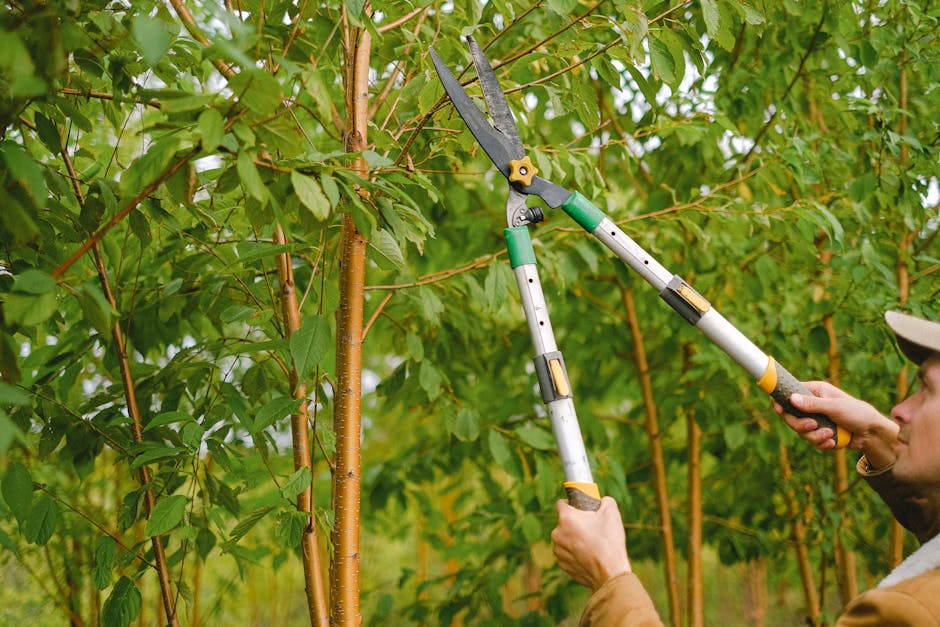
Remove dead wood any time you see it. Unlike live-branch pruning, which has strict timing rules (see our guide on when to trim your tree), dead wood removal is safe year-round. Dead branches can’t be harmed further, and removing them eliminates entry points for decay fungi.
Small branches (under 2 inches in diameter) you can handle yourself with a pruning saw or loppers. Use the three-cut method:
- Undercut first. About 12 inches from the trunk, cut upward from the bottom about one-third through the branch. This prevents the bark from tearing down the trunk when the branch falls.
- Top cut second. A few inches farther out from the undercut, cut downward. The branch drops cleanly.
- Final cut. Remove the remaining stub by cutting just outside the branch collar (the swollen ring where the branch meets the trunk). Don’t leave a stub. Don’t cut into the collar. The collar contains the tree’s wound-sealing tissue.
Skip the wound sealer. The ISA says pruning sealants don’t help and can actually slow healing by trapping moisture. Your tree will compartmentalize the wound on its own.
For anything over 2 inches, especially high up, hire a certified arborist. Falling branches are heavier than they look. A 6-inch diameter limb that’s 8 feet long can weigh over 100 pounds. Cutting them wrong strips bark down the trunk and creates wounds that take years to close.
Spring is also the time to remove suckers (those thin shoots growing straight up from branches or the base) and water sprouts. They drain energy from the tree and never develop into useful structure.
How do I mulch around my trees?
Mulch is the single best thing you can do for your trees with the least effort. The ISA recommends 2 to 4 inches of organic mulch, applied in a ring from 6 inches away from the trunk out to the drip line (the outer edge of the canopy).
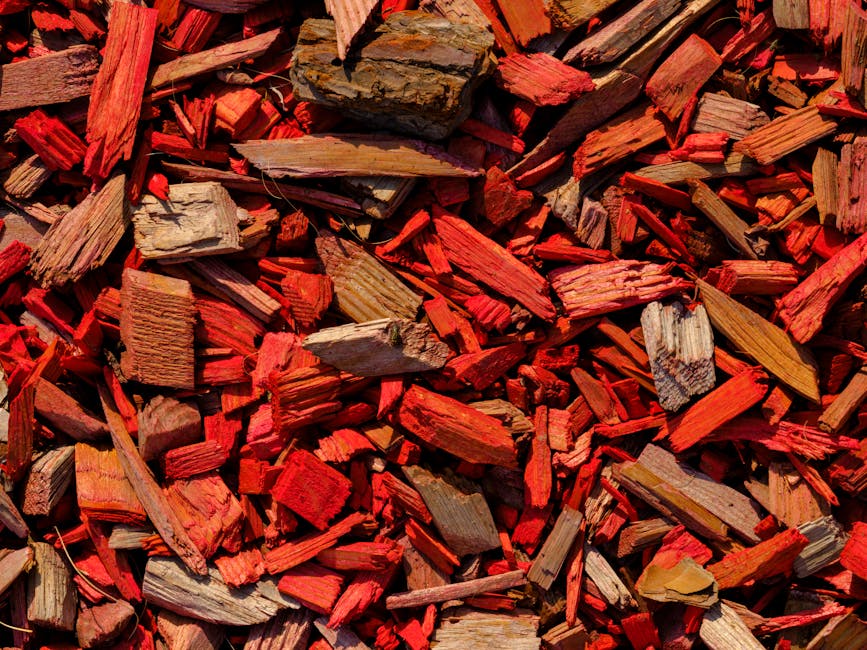
Hardwood mulch, wood chips, or shredded bark all work. Fresh arborist wood chips (the stuff tree companies chip on-site) are free from most tree services and break down into excellent soil over 2-3 years. Call your local tree companies in spring and ask if they need a place to dump chips. Most will deliver a truckload for free.
Proper mulching does four things:
- Holds moisture in the root zone during summer dry spells
- Suppresses weeds that compete with tree roots for water and nutrients
- Insulates roots from temperature swings (this matters in zones 7-9 where spring frosts can hit in March)
- Feeds the soil as it decomposes, supporting mycorrhizal fungi that help tree roots absorb nutrients
Replace or refresh mulch once a year. Old mulch compacts and loses its ability to hold water. Pull back any existing mulch that’s gotten matted, break it up, and add fresh material on top. Mulching is just one part of seasonal upkeep. These guidelines for proper garden maintenance cover the rest.
Do not pile mulch against the trunk. Mulch volcanoes (those mulch cones piled 6-12 inches high against the bark) are everywhere, and every single one is killing the tree slowly. Wet mulch against bark causes crown rot by keeping the trunk base constantly damp. It also creates habitat for bark beetles and rodents that gnaw the bark. I see them in half the yards in my neighborhood. Every landscaper knows better, but some still do it because it looks tidy to people who don’t know what they’re looking at.
Should I fertilize my trees in spring?
Most established trees in residential yards don’t need fertilizer. If your tree is growing 6+ inches of new twig growth per year, producing full-sized leaves, and looks healthy, leave it alone. You’re adding cost and chemicals with no benefit.
Fertilize if you see:
- Pale, undersized leaves (possible nitrogen deficiency)
- Sparse canopy when other trees of the same species nearby are full
- Stunted new growth (less than 2 inches per year on a species that should be pushing 6+)
- Soil that’s been heavily disturbed by construction, which strips away topsoil and organic matter
If you do fertilize, use a balanced slow-release formula (10-10-10 or similar) in early spring as buds start swelling. Spread it in a ring under the canopy, from about 2 feet from the trunk out to the drip line, and water it in. Follow the label rates. More fertilizer does not mean more growth. It means burned roots and excess nitrogen runoff into storm drains.
A soil test is $15-30 through your local cooperative extension office and tells you exactly what your soil needs. That’s the smart move before spending money on fertilizer bags.
Fruit trees are different. They need fertilizing in February with a low-nitrogen formula (1-2-1 ratio). High nitrogen pushes leaf growth at the expense of fruit. See our full fruit tree fertilizing guide.
How much should I water my trees in spring?
This is the most neglected part of spring tree care, and in Northern California it’s the most consequential. We get our last meaningful rain in March or April, then nothing until November. Trees that don’t have deep, established root systems going into summer will struggle.
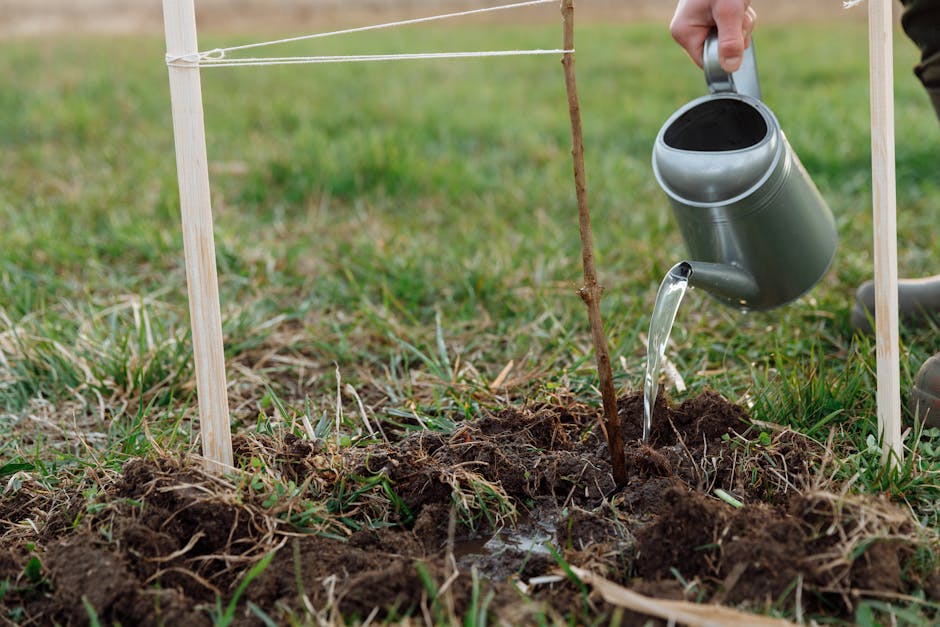
Trees planted in the last 1-3 years need active watering from the moment rain stops. The rule of thumb from Sacramento Tree Foundation is 15 gallons per week per inch of trunk diameter. A 2-inch caliper tree gets 30 gallons per week. Water slowly and deeply. Set a hose on a trickle at the base for 20-30 minutes, or use a 5-gallon bucket with a hole drilled in the bottom (fill it six times for a 2-inch tree).
Established trees (5+ years in the ground) usually handle spring without irrigation. Their roots spread 2-3 times wider than the canopy, tapping moisture from a huge area. But if your spring was dry, start deep watering once a month in April. The goal is to soak the soil 12-18 inches deep. A soaker hose run along the drip line for 45 minutes does the job.
Avoid frequent shallow watering. Daily sprinkler irrigation for your lawn actually harms nearby trees. It keeps roots near the surface instead of pushing them deep. Trees with shallow roots blow over in storms. Water deep, water infrequently.
What should I do about the lawn around my trees?
While you’re at it, look at the grass under and around your trees.
Bare patches under the canopy usually mean too much shade or root competition. You’ll never win this fight with grass seed. Consider replacing sparse grass with mulch or a shade-tolerant groundcover like native wild strawberry (Fragaria vesca) or creeping thyme. A tree with a 4-foot mulch ring around it looks better than a tree surrounded by dying grass, and the tree will be healthier for it. If you need to rethink larger areas of your yard, the ultimate lawn makeover guide has a good framework for deciding what to keep and what to replace.
Compacted soil from foot traffic or mowing makes it hard for both grass and tree roots to get oxygen. If the soil under your tree is hard-packed, rent a core aerator for $60-80/day and run it over the root zone. Do this in early spring before the soil dries out. Don’t use a spike aerator. It compacts the soil further.
Lawn chemical timing matters. Pre-emergent herbicides and broadleaf weed killers can damage tree roots, especially in young trees with shallow root systems. Read the label. Most products say “do not apply within the drip line of desirable trees.” If yours doesn’t say that, assume it anyway.
Spring is also the right time to plant
If you’ve been thinking about adding a tree, spring (March through May in zones 7-10) is your second-best planting window after fall. The soil is warm, rain is still coming, and the tree has a full growing season ahead to establish roots before summer heat. Check our guide to planting bare root trees if you’re buying from a nursery that ships dormant stock. Bare root trees cost 30-50% less than container-grown and establish faster when planted correctly.
Set your trees up for the year
This spring checklist takes less than an hour and prevents problems that cost hundreds or thousands to fix later. Dead branches left on the tree invite decay. Missing mulch means drought stress by July. Skipping the inspection means you find the cracked branch when it falls on your car during the next windstorm.
Thirty minutes now saves you real money and real headaches all summer. Get it done before April, and your trees will reward you with a solid growing season.